header-photo

The Moon

I've photographed the moon in so many ways at so many different times. It's very encouraging to see Artemis II fly out to and return from a swing around the Moon. In my entire lifetime, that is the first time it's happened. I've long been fascinated by it, watching many documentaries on the various Moon landings and wondering why we’ve taken so long to get back when we went several times and flew 24 people very close to the surface, from 1969 through 1972.
A little more than a decade later, I was born, and I still had to wait decades for it to happen again. I figured with so much activity, getting regular visits would be as routine as building new cars. Yet, that didn’t happen. Not to say that space exploration is easy, or that the money Earth has spent on it was wasted, but no Moon! People have set foot on and modified just about every place on this planet; you figure the moon is next.
Although there is a lot of space junk on the moon. I often wonder if future visitors to the moon will be able to trample on the spaces occupied by the lunar descent module lander stage, the instruments, and other memorabilia left on the Moon’s surface. Someone may even consider every footprint a historical artifact that shall not be disturbed. They are likely to last for a very long time, until some new crater on the moon throws dust over them. Or maybe they will dig them out and store them in a Moon museum.
That gets even more interesting when you consider Gene Cernan and Harrison "Jack" Schmitt (Dec 1972) put 22 miles on their moon rover odometer. That’s a lot of old historic markings that are probably the same as they left them.
Either way, it’s exciting to see some progress. Artemis III was supposed to land humans on the Moon, but it appears it will be more of a test of landing-vehicle concepts. The SpaceX Starship HLS feels kind of nuts to me, because it’s so tall. I would not trust such an impractical design.


April 8, 2024; Solar eclipse

January 2019 Lunar Eclipse

July 2018


August 2017, covering up the sun


July 2015


February 2015


October 2014; eclipsing the sun at sunset.


August 2014


July 2014


June 2014


September 2013


August 2013


March 2012


September 2005


The Gundam Seed moon base


Systems II

Also, you get the more complicated systems. I see this happening right now.

Once upon a time, we had a large, complicated system, and even though it transported both water and electricity, and different customers consumed them, we still tried to move them through the same pipeline. Eventually, the system managers got smart and set up unique delivery systems for both products.

All were happy. The customers got their water; others got their electricity; and those who needed it got both. There was another subsystem that delivered natural gas, and demand was seasonal, but they decided to just put them with the water people. It worked, but the seasonal nature of gas vs water created some problems.

Then, suddenly, the managers thought things would go better if they tried to transport water, gas, and electricity using the same pipeline again.

Things are messy.

Systems

Systems are only as good as the components that comprise them. While I’ve seen systematic approaches championed many times, I’ve also seen failures when particular components don't hold up under the system's stresses.

A classic system diagram comprises a bathtub. This system has an input— the faucet —and an output —the drain.
The system uses water as the physical thing it drives.
The faucet is a junction for two water inputs: cold and hot. The user can adjust these components to create a wide range of water temperatures coming into the tub. The flow for each can go from 0 to 100%.
The drain has a similar configuration. The flow can go from 0 to 100%.
The tub can hold a certain amount of water before failing. Typically, the system can drain water faster than it can take it in, but bandwidth ranges can occur.


Someone can tell you that the bathtub is a perfect system. It does everything you want it to. But what happens if the user demands more water than the system can handle?
Well, it doesn’t work any longer. The tub overflows, or the faucets can’t deliver it. The user starts bringing in five-gallon buckets and dumping them into the tub. This helps to fill the tub faster, but the drain can’t handle the amount of water coming in.
If the buckets help fill the tub faster, then suddenly the drain can’t remove it any faster. If there is a demand to empty the tub faster, an engineer drills an additional drain, or users start manually taking buckets of water out.
Then, when the smoke clears, you have a bunch of buckets, a hole in your tub, but hey, you got it all done faster.

Are We Inside a Black Hole?

This isn't the first time it's been proposed. We could also consider hypothetical Gravastars.

https://www.space.com/space-exploration/james-webb-space-telescope/is-our-universe-trapped-inside-a-black-hole-this-james-webb-space-telescope-discovery-might-blow-your-mind

The idea of Gravastars somewhat complicates the concept of a universe within a universe. Gravistars are thought to contain maximized condensed empty space. You can't get it any smaller. So, how would we survive inside a black hole, a place with significant crunch going on? But I guess density could be relative. You could crunch more, just not so easily, in our own universe.

Concepts beyond me, but always fascinating.

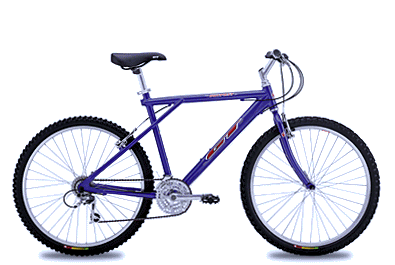
Old shoes; old bike


Not sure if I had both of these at the same time, but I remember them both.


Petalodus

ChatGPT, you are getting better. Was this always your purpose? 


Time

Time runs slower for objects moving fast.

Time runs slower for objects closer to a strong gravitational pull.

True things:

Say you have two clocks that keep accurate time. If you leave one at home and take one with you on a round-trip airplane flight, the clock you bring with you on the trip will be behind the one you left at home when you get back.

If you take the same two clocks, put one on top of a mountain and one down by the beach (assuming no weird gravitational pull anomalies based on geographical location), the clock on the beach will be behind the one on the mountain. While that example is extreme, you can replicate scaled results simply by placing one on a table and one on the floor.

The mountain example works for Mount Everest.

https://ascentdescentadventures.com/blog/is-gravity-different-at-the-top-of-everest/
https://www.physicsclassroom.com/class/circles/lesson-3/the-value-of-g

  • At sea level, the value of g is approximately 9.806 m/s².
  • At the summit of Mount Everest, this value drops to around 9.773 m/s².
  • At twice the distance from the center of the Earth, g is approximately 2.45 m/s².
These clocks running slower or faster experiences always depend on two relative points in space. If you are an observer in intergalactic space (between galaxies) and one on Earth, the clocks are running very differently. There is a measurable difference if you are a person on Pluto vs. someone on Earth. It is not the insane levels shown on Interstellar, but it will tick by differently.

The Speed of Light

The last thing that is often tricky to comprehend is how things moving at the speed of light observe time. It has been shown using equations that anything with measurable mass cannot move at precisely light speed. There is a problem with mass and energy when you reach that c speed. However, if you could move at that speed, you could travel anywhere in the universe instantly for yourself.

The math shows that time would stop for a mass moving at the speed of light. If you wanted to travel 500 light-years at instant light speed, stop, and return at the same rate, it would take you 0 seconds, but the Earth would have experienced 1,000 years. Going to instant light speed is currently impossible, let alone changing direction 180 degrees in an instant.

Most of our ambitious plans to send probes to nearby stars use laser energy to speed objects up to insane speeds to shorten the time required to get there. If we could get a probe to 80% of the speed of light, the probe would experience 3/5ths of a year for every 1 year we sat here and waited for it to return the signal.


Fall Mid latitude Aurora

Last year, we were treated to at least two (some accounts say four) different aurora displays. The first one in the Summer was surprising, an event I had never experienced. The skies don't light up quite like the photos below, but you can tell there are reds and purples, and the curtains of charged particles are noticeable as you look skyward.

I set up a long exposure timelapse and captured the video below during the second aurora I witnessed in early October.

A phone photo highlights the color well. Digital devices detect charged particles well.


RIP Dark Energy

Dark energy and dark matter are both used to explain the unexplainable. Dark energy has been touted as reverse gravity, pushing things apart and explaining the Universe's accelerating expansion. This idea is used to describe things we could not understand.

However, a new study demonstrates that differences in gravity can actually explain it.

In short, time in the Milky Way Galaxy (our home galaxy) may run up to 35 percent slower on average. So, while 100 years in our galaxy is 100 years for us, approximately 153 years pass in intergalactic voids. Ramp that up to a billion years, and a whole extra 500 million years happen in the void. This is additional time for expansion, so it happens much faster. 

Mind blown.

References

Politics and Advertising

This one will be short because it's not a fully formed thought. I've been on YouTube quite a bit over the past month or so, and the number of U.S. presidential campaign ads on videos is very high. You could watch a 10-minute video and see four ads, often two from each candidate. I'm unsure if the content creators can control which ads appear; I've seen right-leaning ads on left-leaning content and vice versa.

According to EMARKETER, 9% of political spending (national, regional, local) will occur on Meta and Google in 2024.

There's nothing like supporting your favorite candidate with a donation, and nearly 10% of it ends up in the pockets of two large American corporations. To be fair, the YouTube content creators also get their cut.

References

  1. https://www.emarketer.com/press-releases/2024-political-ad-spending-will-jump-nearly-30-vs-2020/